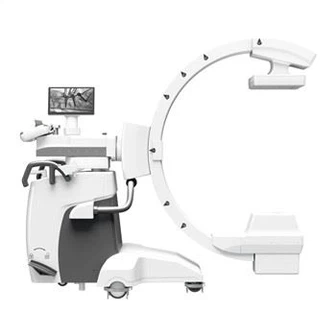
Endovascular Robotics System Completes Compartment PCI Surgery
Recently, the team of Director Liu Wei of Beijing Jishuitan Hospital used ETcath 200 Endovascular Robotics System to successfully place a stent in a patient with bifurcation disease of the anterior descending branch. An important clinical practice performed by the ETcath 200 Endovascular Robotics System of WeMed Medical.

The Patient
Female, due to chest pain half year after activity, aggravated for three days, with a history of diabetes for 15 years.
Preoperative Image
Angiography showed the heaviest stenosis of 85% in the middle segment of the LAD, and no obvious stenosis was found in the LCX and RCA


Surgical Strategy and Process


Use the ETcath 200 interventional robot to fine-tune the guiding catheter so that it reaches the coronary artery ostium, establish a device delivery pathway, and select Runthrough and SION guide wires respectively. Using different guidewire control modes of the robot, the two guidewires were successfully pushed to the distal end and the diagonal branch of the LAD respectively, and the robot was used to push the IVUS along the guide-wire for evaluation. A 3.0×22mm stent was positioned at the lesion and released. Finally, a 3.5×9mm balloon was used for post-dilation. Multi-position angiography and IVUS images showed that the stent was well expanded, and there was no obvious residual stenosis in the stent. The TIMI blood flow classification was grade III.


Doctor Said
WeMed Medical ETcath200 interventional surgery robot can not only control conventional instruments such as catheters, guide wires, balloons, and stents, but also manipulate intracavity imaging-related instruments such as IVUS and OCT. Through submillimeter-level control of surgical instruments, it can achieve precise and refined operations.