Why Response Time Is Critical In Medical Displays?
In medical imaging, every detail matters. While specifications such as resolution and luminance often receive the most attention, response time is a critical performance parameter for many life-saving procedures. This article explains what response time is and why it differentiates standard displays from high-performance medical monitors.
What Is Response Time?
Response time describes how quickly a display's pixels can change state. Specifically, it refers to the total time required for a liquid crystal to transition from black to white and back to black, measured in milliseconds (ms). This complete cycle-rising plus falling time-determines how rapidly the screen can refresh images in response to incoming signals.
Human Vision and Motion Perception
The human eye exhibits a phenomenon known as persistence of vision. To perceive motion as smooth and continuous, a display must refresh faster than the eye can distinguish individual frames. In cinema, the commonly accepted standard is 24 frames per second (fps), meaning each frame is displayed for approximately 40 ms.
In dynamic medical imaging, however, this benchmark is often insufficient. If a monitor's response time is too slow-for example, around 30 ms-motion artifacts such as blurring or trailing may appear. These artifacts can obscure critical details during real-time clinical procedures.
Clinical Requirements: Static vs. Dynamic Imaging
Response time requirements vary significantly depending on the clinical application:
Static Imaging (CR/DR, Mammography):
For static image review, response time is not a limiting factor. Instead, resolution, grayscale accuracy, and image uniformity are the primary considerations.
Dynamic, Real-Time Imaging:
Fast response time is essential for procedures involving continuous motion, including:
Medical Digital Subtraction Angiography (DSA)
Digital gastrointestinal fluoroscopy
Cardiac catheterization
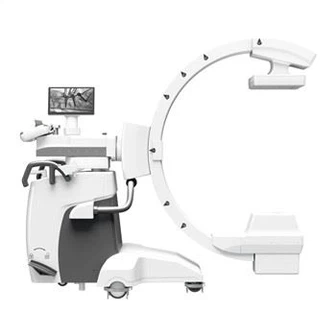
Surgical guidance using mobile C-arm systems
In these settings, clinicians must clearly observe real-time movement of catheters, contrast media, and anatomical structures. A medical display with a response time below 25 ms-supporting refresh rates above 40 fps-minimizes motion blur and ensures smooth, accurate visual feedback.
Conclusion
Selecting a medical monitor is not merely a technical choice but a clinical one. For applications involving dynamic imaging, a fast response time (<25 ms) is as critical as high brightness and contrast. It preserves image integrity during real-time procedures, enabling clinicians to work with greater precision, safety, and confidence-ultimately supporting better patient outcomes.