Where Exactly in the Human Body is DSA Applied?
Mapping the Human Body: Where DSA Shines
Now that we know how Digital Subtraction Angiography (DSA) creates a flawless map of our blood vessels, where do doctors actually use it? Because it provides such a clear, real-time view of the circulatory system, DSA is an invaluable tool across the entire human body-not just for finding problems, but for fixing them.
Here are the five primary areas where this technology is used in modern medicine:
1. The Brain and Neck
DSA is incredibly accurate and sensitive when investigating cerebrovascular diseases and brain tumors. It gives doctors a crystal-clear look at the vital arteries supplying the brain-including the carotid, vertebral, and basilar arteries-allowing them to pinpoint exactly where blood flow might be compromised.
2. The Chest (Thoracic System)
When looking at the heart and the surrounding major vessels, DSA excels at visualizing the aortic arch and the aorta itself. It is commonly used to diagnose severe conditions like aortic dissecting aneurysms (tears in the aorta's inner wall) and to see the extent of vascular inflammation (arteritis).
3. The Abdomen
Our digestive organs, liver, and kidneys rely on a massive network of blood vessels. DSA is widely used to examine the abdominal aorta, renal (kidney) arteries, and the vessels supplying the intestines. It helps doctors quickly spot atherosclerosis (hardening of the arteries) and dangerous blockages in these critical areas.
4. The Arms and Legs (Extremities)
If a patient is experiencing poor circulation in their limbs, DSA can map out the trunk arteries and their branches. It allows doctors to accurately diagnose obstructions, narrowing (stenosis), aneurysms, and various arterial malformations in the arms and legs.
5. The Real-Time GPS (Interventional Radiology)
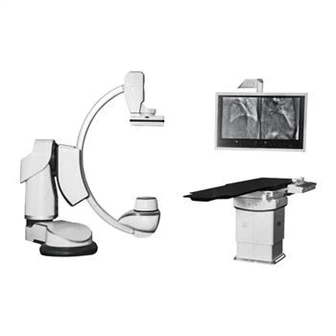
Perhaps the most powerful application of DSA isn't just taking pictures, but guiding live, minimally invasive surgeries. In interventional radiology, the continuous X-ray feed acts as a real-time GPS. It allows surgeons to literally watch on a monitor as they thread tiny catheters and guide wires deep inside a patient's arteries with absolute precision.
This visual guidance is crucial for delicate procedures like:
-Blocking off actively bleeding vessels or malformations.
-Starving tumors by cutting off their specific blood supply.
-Delivering highly targeted local drug injections.
- Opening up narrowed arteries from the inside using balloons or stents (angioplasty).