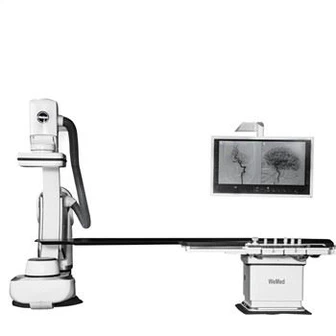
Clinical Applications of DSA (Medical Digital Subtraction Angiography X-ray System)
DSA, a high-resolution vascular imaging technology, plays a vital role in the diagnosis and treatment of various diseases. Its primary clinical applications include the following:
1. Diagnosis of Vascular Diseases
Aneurysms: Identifies the location, size, and morphology of intracranial or other aneurysms.
Vascular Stenosis and Occlusion: Evaluates the degree of stenosis or occlusion caused by atherosclerosis, commonly used for carotid, coronary, and renal artery diseases.
Arteriovenous Malformations (AVM): Determines the anatomical structure and blood supply of abnormal vascular formations.
2. Real-Time Guidance for Interventional Therapies
Percutaneous Transluminal Angioplasty (PTA) and Stent Placement: Guides balloon angioplasty and stent placement in stenotic vessels.
Transarterial Chemoembolization (TACE): Used in tumor treatment to accurately identify tumor-feeding arteries and assist in precise delivery of drugs and embolic agents.
Embolization: Treats conditions such as gastrointestinal bleeding, uterine fibroids, tumors, or ruptured aneurysms by locating bleeding or feeding vessels and performing embolization.
Endovascular Foreign Body Removal: Assists in removing foreign objects such as catheters, stents, or thrombi.
3. Diagnosis and Treatment of Hemorrhagic Diseases
Acute Bleeding Localization: Locates bleeding sites, such as in the gastrointestinal tract or bronchial arteries, and performs embolization for hemostasis.
Postpartum Hemorrhage: In critical cases of maternal bleeding, DSA can accurately locate bleeding vessels and perform interventional hemostasis.
4. Tumor Diagnosis and Treatment
Tumor Blood Supply Analysis: Analyzes the vascular characteristics of tumors, commonly used for liver and kidney tumor diagnosis and preoperative evaluation.
Support for Interventional Therapies: Provides precise imaging support for treatments like TACE and radioactive particle implantation.
5. Neurological Diseases
Cerebrovascular Diseases: Diagnoses and treats conditions such as stroke, ruptured cerebral aneurysms, intracranial arterial stenosis, and AVMs.
Endovascular Thrombectomy: Guides mechanical thrombectomy in acute ischemic stroke treatment.
Clinical Applications of DSA (Digital Subtraction Angiography)
DSA, a high-resolution vascular imaging technology, plays a vital role in the diagnosis and treatment of various diseases. Its primary clinical applications include the following:
1. Diagnosis of Vascular Diseases
Aneurysms: Identifies the location, size, and morphology of intracranial or other aneurysms.
Vascular Stenosis and Occlusion: Evaluates the degree of stenosis or occlusion caused by atherosclerosis, commonly used for carotid, coronary, and renal artery diseases.
Arteriovenous Malformations (AVM): Determines the anatomical structure and blood supply of abnormal vascular formations.
2. Real-Time Guidance for Interventional Therapies
Percutaneous Transluminal Angioplasty (PTA) and Stent Placement: Guides balloon angioplasty and stent placement in stenotic vessels.
Transarterial Chemoembolization (TACE): Used in tumor treatment to accurately identify tumor-feeding arteries and assist in precise delivery of drugs and embolic agents.
Embolization: Treats conditions such as gastrointestinal bleeding, uterine fibroids, tumors, or ruptured aneurysms by locating bleeding or feeding vessels and performing embolization.
Endovascular Foreign Body Removal: Assists in removing foreign objects such as catheters, stents, or thrombi.
3. Diagnosis and Treatment of Hemorrhagic Diseases
Acute Bleeding Localization: Locates bleeding sites, such as in the gastrointestinal tract or bronchial arteries, and performs embolization for hemostasis.
Postpartum Hemorrhage: In critical cases of maternal bleeding, DSA can accurately locate bleeding vessels and perform interventional hemostasis.
4. Tumor Diagnosis and Treatment
Tumor Blood Supply Analysis: Analyzes the vascular characteristics of tumors, commonly used for liver and kidney tumor diagnosis and preoperative evaluation.
Support for Interventional Therapies: Provides precise imaging support for treatments like TACE and radioactive particle implantation.
5. Neurological Diseases
Cerebrovascular Diseases: Diagnoses and treats conditions such as stroke, ruptured cerebral aneurysms, intracranial arterial stenosis, and AVMs.
Endovascular Thrombectomy: Guides mechanical thrombectomy in acute ischemic stroke treatment.
6. Peripheral Vascular Diseases
Lower Limb Arteriosclerosis Obliterans: Assesses the extent of the lesion and guides vascular reconstruction procedures.
Venous Diseases: Diagnoses and treats conditions such as deep vein thrombosis and varicose veins.
Conclusion
DSA plays an irreplaceable role in vascular imaging, disease diagnosis, and interventional treatment. Particularly in complex cases requiring high-resolution, real-time imaging, it significantly improves diagnostic accuracy and patient outcomes.