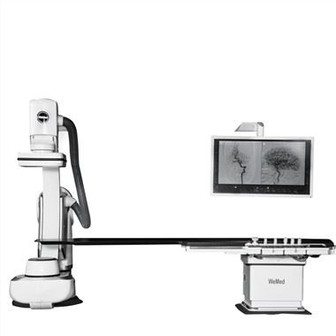
8 Types Of Endovascular Interventional Techniques II
Introducing a catheter through the peripheral vascular puncture, and injecting a contrast agent into the blood vessel through the catheter to visualize the lumen of the vessel to diagnose vascular diseases is the "gold standard" for diagnosing vascular diseases. According to the site and depth of the catheter into the blood vessel.

There are 3 categories:
1. Non-selective Angiography
Angiography of large arteries connected to the heart, such as the aorta, pulmonary artery, and vena cava, to diagnose lesions of large vessels and to visualize associated vascular branches.
2. Selective Angiography
Angiography of first-order branches of large blood vessels is used to display the blood supply of an organ or a certain area as a whole, and to display lesions, pathological blood vessels of lesions, and the relationship between lesions and normal blood vessels, etc.
3. Ultra-selective Angiography
Angiography of secondary or higher branches of large vessels is used to directly display lesions and vascular structures within organs. There are cardiac angiography, arteriography, venography and lymphangiography.