WeMed Medical Conducts The Hands-Eyes-Brain Collaborative System In The Field Of Interventional Equipment
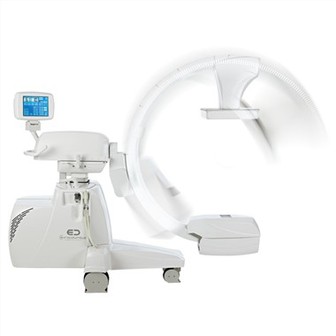
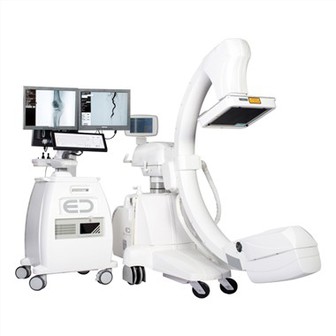
In the operating room, real-time images of patients are captured and transmitted by a device that looks like a letter C. Outside the operating room, the doctor sits in front of the computer screen and holds the joystick to complete the operation by remote control of the robot.
This is not a scene in a sci-fi movie, but what happened in real. In Beijing Anzhen Hospital, a PCI operation was assisted by a domestic self-developed Endovascular Robotics System.

The Endovascular Robotics System is independent developed by WeMed Medical. It is also the first domestic self-developed interventional surgery robot product that has entered the "green channel" of national innovative medical device approval.
As a national-level professional and special new "little giant" enterprise in Beijing Economic Development Zone, WeMed Medical has become the first domestic enterprise of Medical Digital Subtraction Angiography System to obtain the double certifications of NMPA and CE.
From the Medical Digital Subtraction Angiography System to Endovascular Robotics System, and then to AI intelligent workstations, we are gradually deploying the "eyes + hands + brain" collaborative system for interventional diagnosis and treatment. " said Mr. Yang He, CEO of WeMed Medical.

What are the “Eyes”
The Medical Digital Subtraction Angiography System, the core equipment for interventional diagnosis and treatment, and is mainly used in the diagnosis and treatment of systemic vascular diseases. It is equivalent to provide doctors with more intelligent "eyes" through X-rays, and seeing 3D images of blood vessels.
What are the “hands”
In the process of developing the Medical Digital Subtraction Angiography System and gradually developing a full range of products such as Mobile cath lab and Mobile C arm X ray Machine, WeMed Medical has captured a new clinical pain point.
During long-term clinical observation and communication, many doctors generally reported that interventional surgery is difficult to achieve standardization, and doctors need to wear heavy protective clothing for radiation protection, just like performing one operation after another with buckets of water on their backs.
WeMed Medical decided to enter the more precise "hands". That is, the field of robotics, and independently developed the Endovascular Robotics System--ETcath. Since catheters and guide wires are put into blood vessels during surgery, surgical robots must have sensitive perception capabilities. After repeated trials and iterations, the perception of the robot has been compared to the pressure perception state when a coin is placed in the palm of the hand.
In the future, WeMed Medical will provide "DSA + Endovascular Robotics System” linkage solutions, creates an interventional diagnosis and treatment "eyes-hands-brain" collaborative system, effectively optimize the operation method, and truly solve the pain points of doctors and patients.