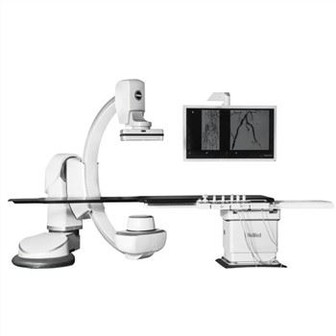
Anzhen Hospital And WeMed Medical Interventional Robot Collaborative Innovation Achievements Announced
In 2021, Wemed Medical and the team of Professor Zhou Yujie of Beijing Anzhen Hospital of Capital Medical University, Zhai Guangyao, Chen Zheng, Liu Ruifang, Guo Yonghe, Wang Jianlong, Sun Tienan, Xie Jing, Huang Tao, based on WeMed Medical's "Made in China" intelligent intervention The surgical robot ETcath200 has done a lot of cutting-edge exploration and recently published high-level academic papers.

Background: Several studies have confirmed the safety and efficacy of interventional PCI under the precise control of interventional robot, but this research is still blank in China. This study aims to evaluate the safety and effectiveness of robotic-assisted systems in PCI in China.

Research Methods: The safety and effectiveness of the ETcath200 robot were verified by experiments, and then 11 patients with coronary artery disease who met the conditions of PCI inclusion were screened out, and the operation was completed by the ETcath200 robot.
The criteria were a clinical success (defined as residual stenosis <30% on visual assessment after PCI and no major adverse cardiovascular events during hospitalization and within 30 days after PCI) technical success (defined as the use of robotic-assisted systems without the need to switch to traditional manual completion surgery).
RESULTS: Eleven patients underwent the trial, all of whom had a 3mm diameter (interquartile range: 2.75-3.5mm) and 26mm (interquartile range: 22-28mm) Drug Eluting Stent implanted. The clinical success rate was 100%, with no PCI-related complications, no in-hospital or major adverse cardiovascular events within 30 days, and a 100% technical success rate.
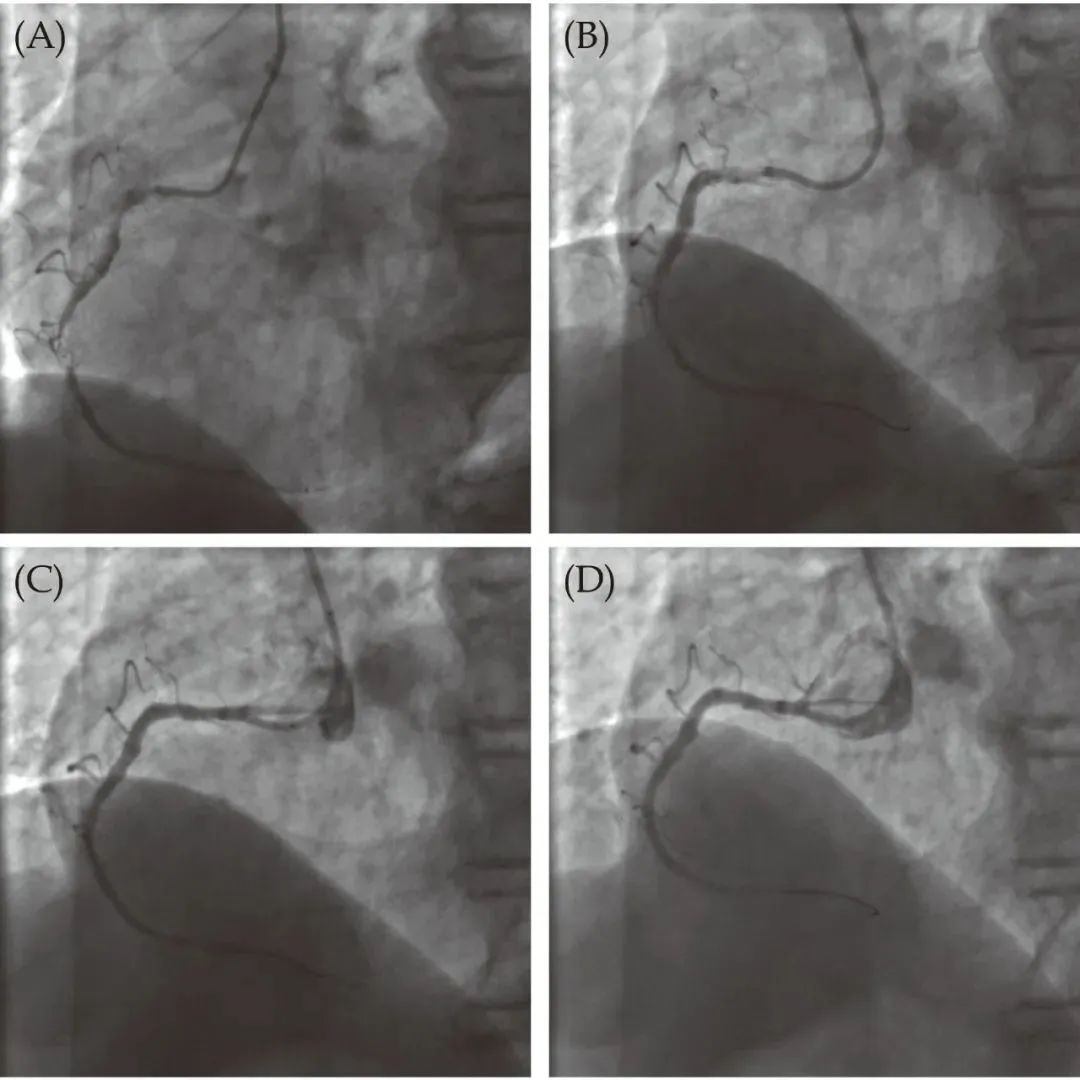
The PCI images of a robotic-assisted system for patients:
A: Angiographic images before PCI using a robotic-assisted system
B: Pre-dilation image
C: Image after stent placement
D: Post-dilation image

Research Conclusion
1. Remote Control Interventional Robot Surgical System
The remote control technology of interventional robots enables doctors to work under X-ray radiation without wearing heavy lead clothing, which greatly reduces the radiation dose of interventional doctors and prolongs their professional life.
2. Biomimetic-based guide wire control technology
Precise control of the guide wire catheter simplifies the control difficulty, lowers the threshold for doctors to operate, and especially improves the success rate of low-level interventional surgeons and reduces complications. The control of the catheter and guide wire is digitized, which is convenient for summarizing the interventional operation techniques and is conducive to the popularization of interventional technology.
The improvement of guide-wire control accuracy can help doctors to achieve quantitative guide-wire control. Avoiding guide-wires entry into ineffective bifurcated vessels, which is shorten the operation time. Reducing surgical risk by avoiding guide-wire entering risk areas such as dissections.
The precise control of the catheter facilitates precise adjustment of the catheter posture, which can effectively help interventional doctors, especially juniors, to achieve rapid catheter placement and reduce vascular damage caused by frequent catheter operations.
3. The world's first flexible guide wire resistance detection technology
In the process of interventional surgery, there are many possibilities for the resistance of the guide wire to increase, such as, abnormal twisting of the guide wire, the guide wire passing through severe stenosis, the abnormal direction of the guide wire (cutting the blood vessel), etc., some of which are normal operations. , If it enters the severely narrow end, some abnormal operations should be strictly prohibited.
Through this technology, the accurate perception of guide-wire resistance can be realized, the unquantifiable guide-wire resistance can be standardized, and the judgment error caused by the individual factors of the doctor can be avoided. At the same time speed up the learning time and avoid long training.
4. Magnetic quick-release disinfection box
The interventional robot fully automates the disassembly of the disposable interventional sterile box and the assembly process of the guide-wires catheter. At the same time, use the visual interface to remind. Significantly shortens the intraoperative replacement time, and realizes quick replacement without tools in 5 seconds.