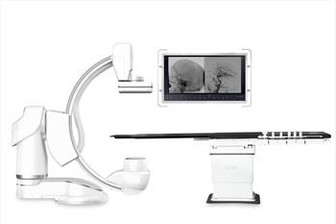
AI-Driven Advancements: Upgrading DSA Precision For Complex Interventional Procedures
Stroke, commonly known as a cerebrovascular accident, is a condition resulting from various causes of vascular damage in the brain, leading to focal or widespread brain tissue injury. It is the leading cause of mortality among Chinese residents.
Stroke is mainly categorized into two types: ischemic stroke and hemorrhagic stroke. Ischemic stroke accounts for 75-90% of all strokes, while hemorrhagic stroke makes up 10-25%. Incidence rates are higher during colder seasons, with peak occurrences typically nearing midday. The most common stroke symptoms include sudden weakness in one side of the face, leg, or arm, difficulty walking, dizziness, loss of consciousness, and memory loss. Stroke is characterized by high incidence, disability, recurrence, and mortality rates.
Epidemiological data released by the Chinese Stroke Association indicates that China currently has 14.94 million stroke patients, with 3.3 million new cases and 1.54 million stroke-related deaths each year. Approximately 80% of stroke survivors experience varying degrees of disability.

Stroke prevention requires a comprehensive approach, considering various aspects, including lifestyle adjustments, disease management, and necessary medication. By implementing these preventive measures, the incidence and mortality rates of stroke can be effectively reduced.
Digital Subtraction Angiography (DSA) is primarily used in stroke treatment as a high-precision diagnostic tool, providing accurate guidance for subsequent interventional therapies. DSA can clearly display the anatomical structure of cerebral blood vessels and blood flow dynamics, aiding physicians in accurately determining the causes of stroke, such as vascular stenosis, aneurysms, and vascular malformations.

Through DSA examination, doctors can assess the number, location, size, shape of vascular lesions, and their relationship with surrounding blood vessels.
During interventional procedures, DSA can continuously monitor changes within the blood vessels, such as the flow of contrast agents. This real-time feedback helps physicians accurately control the treatment process, ensuring both safety and effectiveness.

Compared to traditional DSA, WeMed Medical's DSA offers advanced post-processing features, including Precision 3D, Precision Stent and Precision CT. It can facilitate intelligent information exchange with interventional robotic systems.
Throughout the procedure, DSA imaging data is interactively exchanged with the robot in real-time, enabling intelligent tactile perception and smart planning. This integration provides robust clinical support for complex interventional surgeries, such as neurointerventions.

Therefore, WeMed Medical has developed a collaborative interventional diagnosis and treatment platform that utilizes DSA as the "eye," interventional robotic systems as the "hand," and a smart imaging processing platform as the "brain." This integrated system comprehensively supports the health management of stroke and other diseases.