Take You To Know The Magic Of Cath Lab System III
When we go to the hospital, a lot of people think it's nothing more than internal medicine or surgery. In fact, there is also the third largest clinical department along with internal medicine and surgery, it is called the Interventional Department.
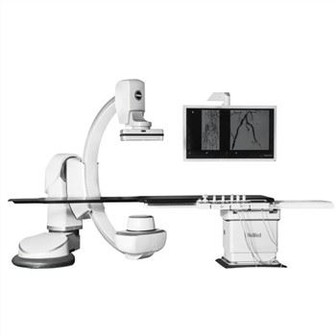
The Interventional Department, as the name implies, is the department of interventional diagnosis and treatment. Surgical treatment relies on surgery, medical treatment relies on medication, and interventional treatment is somewhere in between.It does not require surgery, and is only used to make tiny channels with a diameter of several millimeters on the skin, or through the natural orifices of the human body, under the guidance of Digital Substraction Angiography machine or Mobile C Arm X Ray Machine to carry out diagnosis and treatment of lesions.
Interventional therapy can be divided into tumor intervention, non-tumor intervention, neurological intervention, and gynecological intervention by using Angiography machine or Mobile C arm X ray Machine according to the scope of treatment.
Gynecological Intervention - Preservation of the uterus

Uterine fibroids and adenomyosis are common diseases in women. Conservative medical treatment can only relieve symptoms. In the past, radical treatment was gynecological surgical resection. This is an insurmountable problem for women who have reproductive needs.
Interventional therapy is widely used in the world by embolizing fibroids and adenomyosis lesions to supply arteries and make them ischemic and atrophy, with precise curative effect, small trauma and fast recovery.
Postpartum hemorrhage is a serious complication during childbirth. When medical conservative treatment fails, hysterectomy is necessary to save life, however, minimally invasive intervention not only successfully saves the patient's life, but also preserves the uterus and fertility.
For example, for female infertility, interventional recanalization is applied to the treatment of infertility caused by tubal obstruction. It has the advantages of small damage, simple operation, low cost and no serious complications, and is the best method for the treatment of tubal recanalization.
Digestive intervention - emergency lifesaving

In addition to all kinds of benign and malignant tumors of digestive tract, the application scope of digestive intervention is gastrointestinal bleeding of various causes. Gastrointestinal hemorrhage is mostly an emergency with many causes, such as hematemesis, blood in the stool or various types of post-operative bleeding. If not treated promptly and effectively, death is often due to hemorrhagic shock.
Accurate and timely diagnosis and treatment is very important. For traditional endoscopic or conservative medical treatment, it is still difficult to timely determine the location and cause of bleeding. Vascular interventional technology has obvious advantages in the diagnosis and treatment of gastrointestinal bleeding. Through precise angiography and interventional embolization, it is easy to stop bleeding.
Another major application of digestive intervention is various types of lumen stenosis and fistulas, such as esophageal stenosis, biliary stenosis, esophagotracheal fistula, etc.
Interventional therapy relieves the stenosis through balloon dilation or stent placement, allowing the patient to eat as usual and excrete normally. Even for those who cannot place stents, a jejunal feeding tube can be placed to improve the nutritional status of patients and prevent nutritional failure.