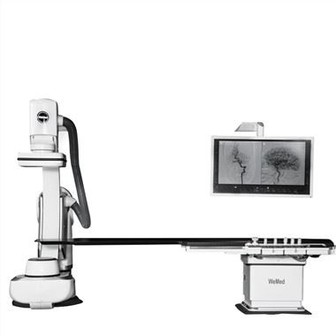
Do You Know The Development of Coronary Stent Enhancement Imaging?
In percutaneous coronary intervention (PCI), the clarity of stent imaging is directly linked to both procedural safety and clinical outcomes. Over the past two decades, stent enhancement imaging technology has evolved from being absent, to blurry, to clear and precise.

1. Early Stage: Limitations of Conventional Angiography
In the early days of PCI, physicians primarily relied on X-ray angiography to observe vessels and stents. However, because stents are small in diameter, made of fine metallic structures, and often overlapped with vascular images after implantation, it was difficult to assess stent edges, expansion, and apposition. As a result, issues such as under-expansion, malposition, and overlapping segments were often not promptly identified.
2. Emergence: The Birth of Stent Enhancement Imaging
Around the year 2000, European and U.S. manufacturers first introduced stent enhancement software. The core principle involved acquiring multiple angiographic frames during the cardiac cycle and processing them through digital subtraction and frame averaging, thereby making the metallic components of the stent appear brighter.
3. Clinical Adoption: From Auxiliary Tool to Standard Practice
After 2005, stent enhancement imaging began to see widespread clinical adoption. It enabled physicians to:
Assess whether stents were fully expanded
Confirm stent position relative to branch ostia
Decide whether post-dilation or additional stent implantation was required
With improvements in image processing algorithms, enhancement became faster and clearer, evolving into near real-time imaging.
4. Progress in China: The Rise of Independent Algorithms
In the past decade, Chinese manufacturers have also advanced stent enhancement technologies. Beyond conventional imaging, the latest systems incorporate AI-driven recognition, such as automatically detecting balloon marker points and reconstructing a "digital skeleton" of the stent. This has significantly improved accuracy in positioning and visualization, enabling domestic systems to gradually close the gap with international platforms.
5. Future Outlook: Toward Intelligence and Multimodal Integration
Looking ahead, stent enhancement imaging is expected to evolve toward:
AI assistance: automatic evaluation of stent apposition, expansion, and residual stenosis
Multimodal fusion: integration with IVUS (intravascular ultrasound) and OCT (optical coherence tomography) for three-dimensional assessment
Real-time visualization: offering more intuitive and immediate intraoperative feedback
From "hardly visible" to "clearly visible", and now "precisely interpretable", stent enhancement imaging has become an indispensable safeguard in PCI. It not only boosts physicians' confidence during procedures but also enhances patient safety. With the continuous integration of AI and multimodal imaging, stent enhancement will further advance coronary interventions toward greater precision and intelligence.