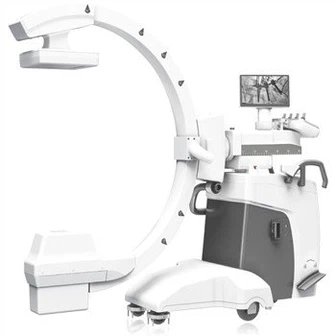
About the Vascular Interventional Robots You Should Know
Vascular interventional surgery refers to the use of puncture needles, guide wires, catheters and other instruments for diagnosis and treatment through blood vessels under the guidance of imaging equipment such as DSA System.The operation has the characteristics of less trauma, quick recovery and precise treatment, and has replaced surgery as the preferred treatment method in some fields.
But There are several obvious problems, such as:
1. Medical staff need to be exposed to X-rays for a long time and must wear lead clothes weighing more than 10 kg.
2. Vascular interventional surgery requires high standards to doctors. It’s difficult to operate, and has a long learning curve.
3. In complicated vascular cases, the operation time is long and complications are prone to occur.
In response to the above pain points, vascular interventional robots emerged as the times require.
Most vascular robots are usually composed of three parts: a propulsion device system, an operating device, and a positioning robot arm. The doctor controls the propulsion device through the rocker or the operation button on the operating table, and realizes the control of advancing, retreating, screwing, changing the direction, and speed of the catheter guide wire on the positioning robotic arm in the operating room, thereby completing the balloon expansion and stent release.
The emergence of vascular interventional surgery robots allows interventional doctors to operate in compartments and get rid of the burden of lead clothing, which has the following advantages:
1. Radiation protection. Experiments have shown that interventional robots can reduce the radiation of doctors by 90% and the radiation of patients by 20%
2. Precise operation, high surgical efficiency and less complications
3. Isolation of doctors and patients, less cross infection
4. Standardized surgery, short learning cycle, and solve the current situation of lack of interventional doctors
In addition to safety, convenience, and respect for conventional surgical procedures, vascular interventional surgery robots also need to think about functional applications that are superior to traditional surgery, such as multiple imaging modalities, artificial intelligence, augmented reality platforms, haptic or feedback sense at the super bionic level. Occupy the technical high ground of vascular interventional robots and establish its leading position in the robot industry.